Loading
Hair loss guide
Understanding Hair Loss, Shedding and Hair Nutrition
Hair loss is not one condition. Genetic thinning, sudden shedding and nutritional shortfalls have different causes and call for different responses. Here is a plain-English guide to each, and where ROOT3 fits in.
Androgenetic alopecia
Male and female pattern hair loss
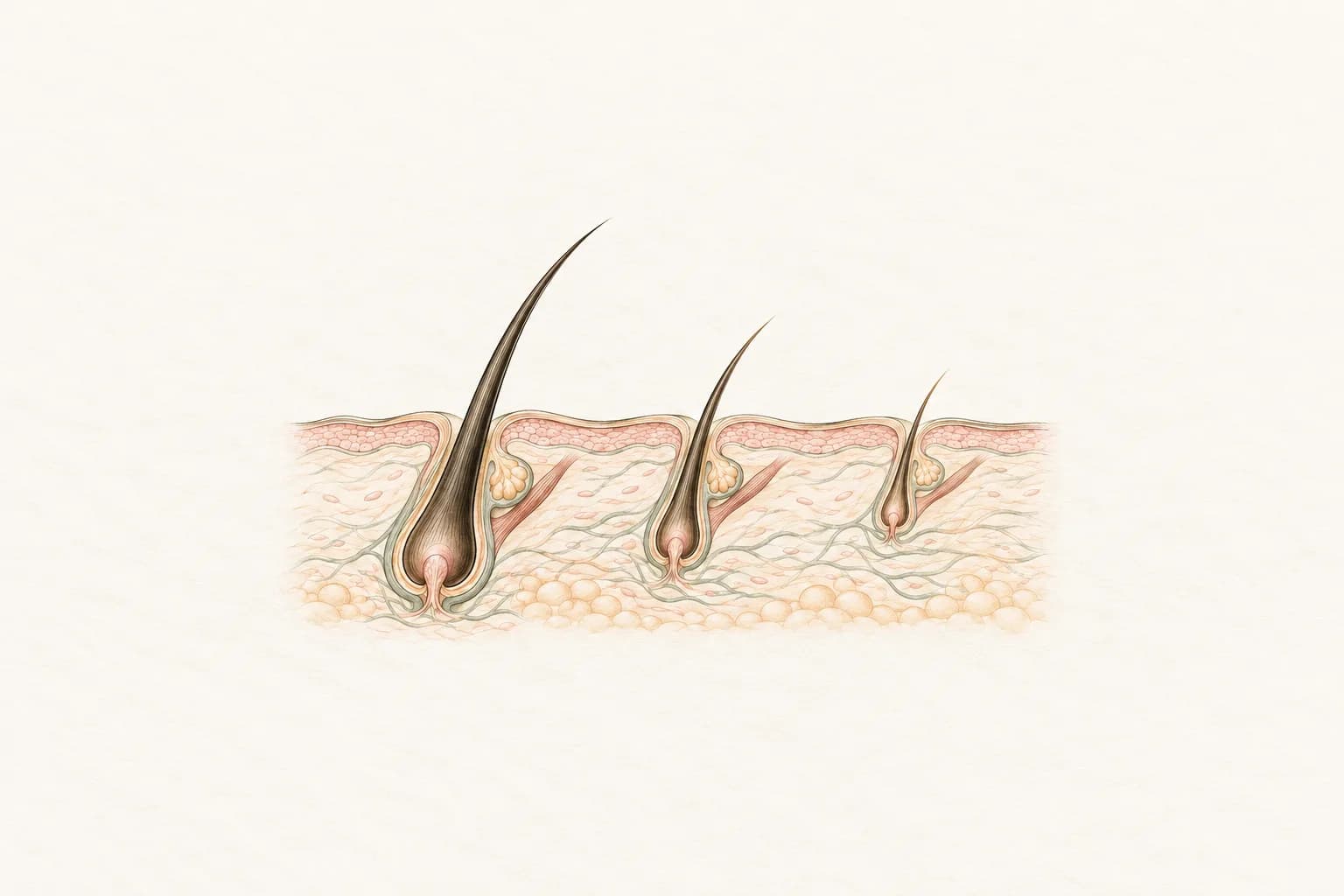
Pattern hair loss is the most common cause of thinning hair, and it runs in families. In people whose hair follicles are genetically sensitive to DHT, a hormone made from testosterone, those follicles gradually shrink. Each growth cycle produces a finer, shorter hair, until some follicles stop producing visible hair at all. This shrinking is called miniaturisation.
In men it usually shows as a receding hairline or thinning at the crown. In women it more often appears as diffuse thinning over the top of the head and a widening parting, while the front hairline stays in place.
Because it is progressive, early assessment matters. Proven medical treatments exist, and a hair restoration professional can tell you which suit you.
Telogen effluvium
Sudden shedding
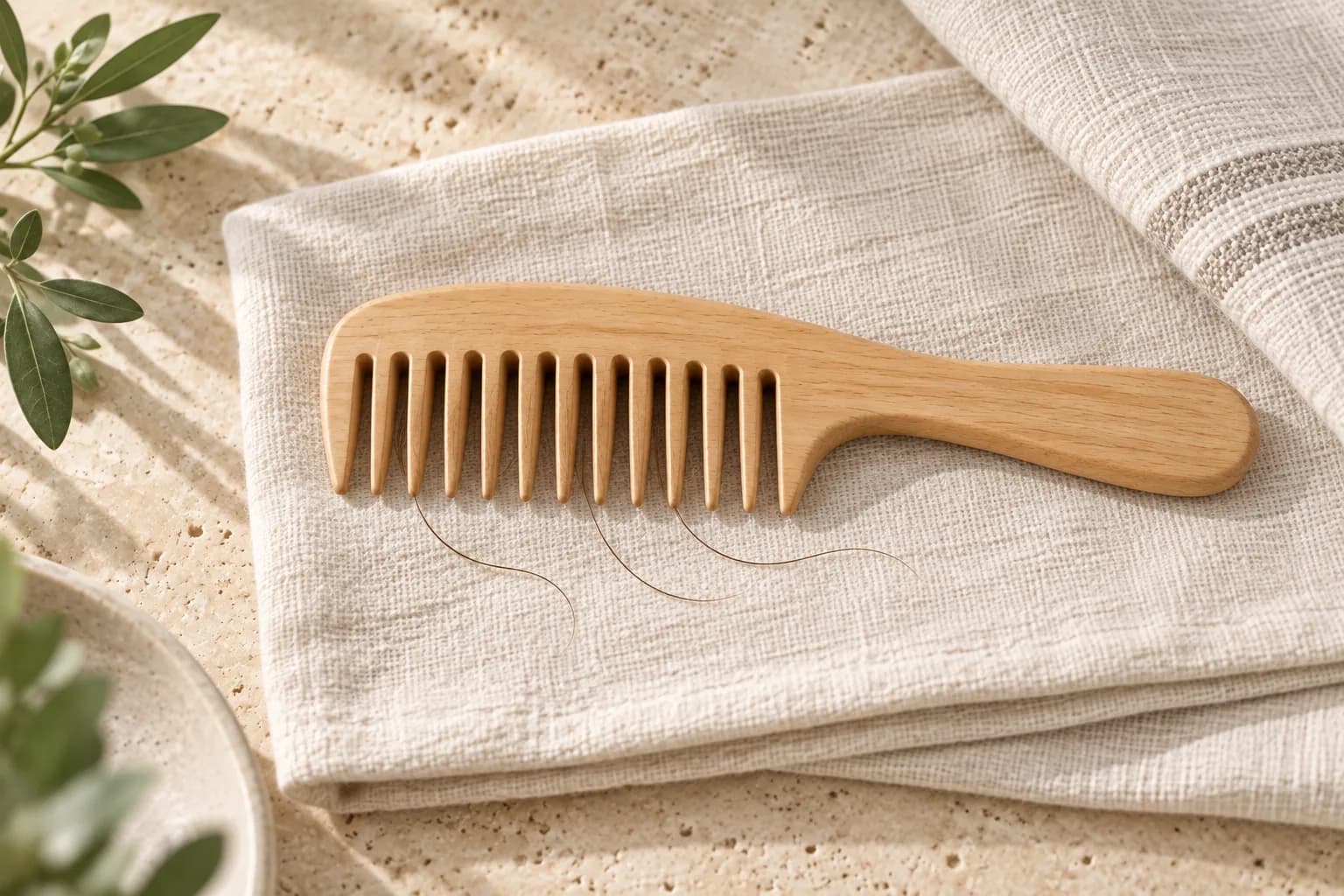
A shock to the body, such as stress, illness or a high fever, surgery, childbirth, rapid weight loss or a nutritional deficiency, can push many growing hairs into the resting (telogen) phase at once. Around two to three months later they shed together, often noticed in the shower or on the pillow.
It is usually temporary: once the trigger has passed, hair typically regrows over the following months. The important step is finding the cause, which may mean blood tests for iron, thyroid function and other factors.
Every hair follicle cycles through four phases. Sudden shedding happens when many follicles enter the resting phase together.
Phase I
Anagen
Active growth
Phase II
Catagen
Transition
Phase III
Telogen
Resting
Phase IV
Exogen
Natural shedding
Nutritional health
The nutrients that matter for hair
Hair follicles are among the most active tissues in the body, so they are sensitive to nutritional shortfalls. Correcting a genuine deficiency can matter. Taking more of a nutrient you already have enough of has not been shown to help hair, and some, like iron, should not be taken in excess. If you are shedding, ask your doctor whether blood tests make sense.
Iron
In ROOT3510 mg
Low iron stores are one of the most common nutritional factors in diffuse shedding, especially in women.
Zinc
In ROOT3510 mg
Contributes to normal hair, protein synthesis and cell division. Inadequate zinc status can contribute to hair problems.
Vitamin B12
In ROOT352.4 µg
Needed for red-blood-cell formation and cell division. Low levels are more likely on a plant-based diet.
Folate
In ROOT35400 µg
Supports amino-acid synthesis and cell division, functions that matter in constantly renewing tissue like the hair follicle.
Vitamin D
In ROOT352.5 µg
Vitamin D signalling plays a role in hair follicle biology, and low status is common where there is little sunlight.
Protein
SourceYour diet
Hair is made mostly of keratin, a protein. Too little protein in the diet, for example during rapid weight loss, can contribute to shedding.
ROOT35 contains 10 mg of iron. If you already take an iron supplement, or have a condition that affects iron levels, check with your doctor before adding it. ROOT35 adds the amino acids L-arginine and L-tyrosine and NAC, but it is not a source of dietary protein.
ROOT3 and medical care
A Complete Routine Alongside Professional Hair-Loss Care
Depending on the cause of hair loss, medical treatment may include finasteride, minoxidil or clinician-guided microneedling. ROOT3 complements a broader hair-health routine: ROOT35 provides nutritional support, ROOT33 cares for the scalp and ROOT34 improves the softness and condition of existing hair.
Medical Care
Finasteride, minoxidil or clinician-guided microneedling, depending on the cause. Guided by your doctor.
ROOT35 Nutrition
Daily nutritional support: researched botanicals, amino acids, vitamins and minerals.
ROOT33 Cleansing
Scalp care that removes oil and build-up and leaves the scalp feeling fresh.
ROOT34 Conditioning
Improves the softness and condition of the hair you already have.
Check that a supplement suits you. If you take prescription medication, are managing a health condition, or are pregnant or breastfeeding, ask your doctor or pharmacist before starting ROOT35. It is not recommended for children or during pregnancy or breastfeeding.
Discover the Complete SystemThe research
Why we chose each ingredient
Plain-English summaries of the published studies behind saw palmetto, pumpkin seed and the rest of the ROOT3 range.