Loading
The science
The research behind our ingredient choices
ROOT3’s formulas are built around ingredients with a clear reason to be there. Where an ingredient has been studied in relation to hair, we summarise what the research found in plain English, and link to the original paper so you can read it yourself.

These studies looked at individual ingredients or preparations, not at ROOT3 products. They explain why we chose each ingredient. They are not clinical trials of ROOT3.
Human research
Saw palmetto and pumpkin seed
The two botanicals that lead ROOT35 have both been studied in people with pattern hair loss. This is what those studies reported.
Human studies
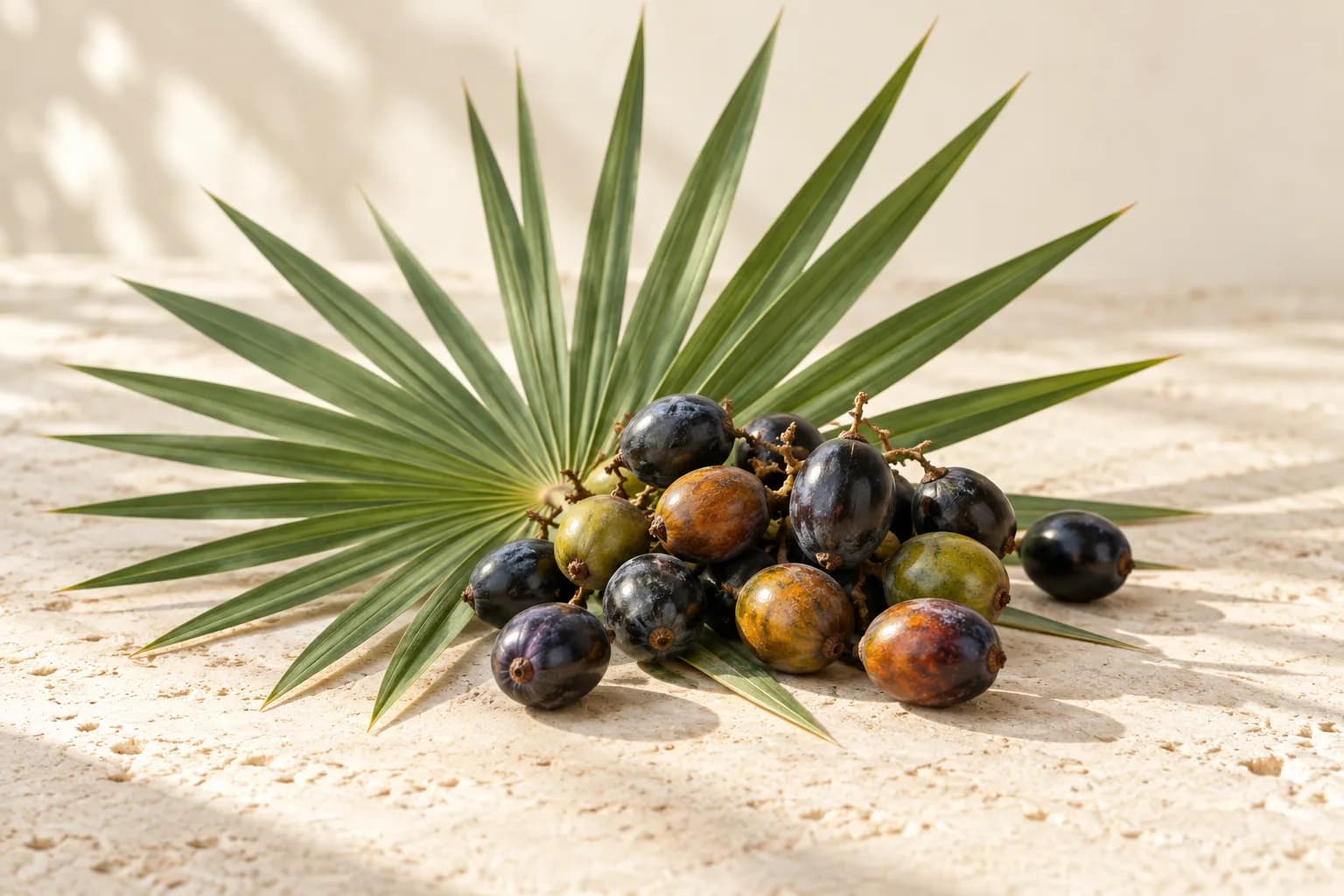
Saw palmetto
In ROOT35, 250 mg (45% fatty acids)
One of the most studied botanicals in natural hair-loss research. In a 16-week placebo-controlled study, a standardised saw palmetto oil was linked with less hair fall, better hair density and lower DHT levels. A smaller pilot study and a systematic review of the published research point in the same direction, while noting that preparations and study sizes vary.
Human studies
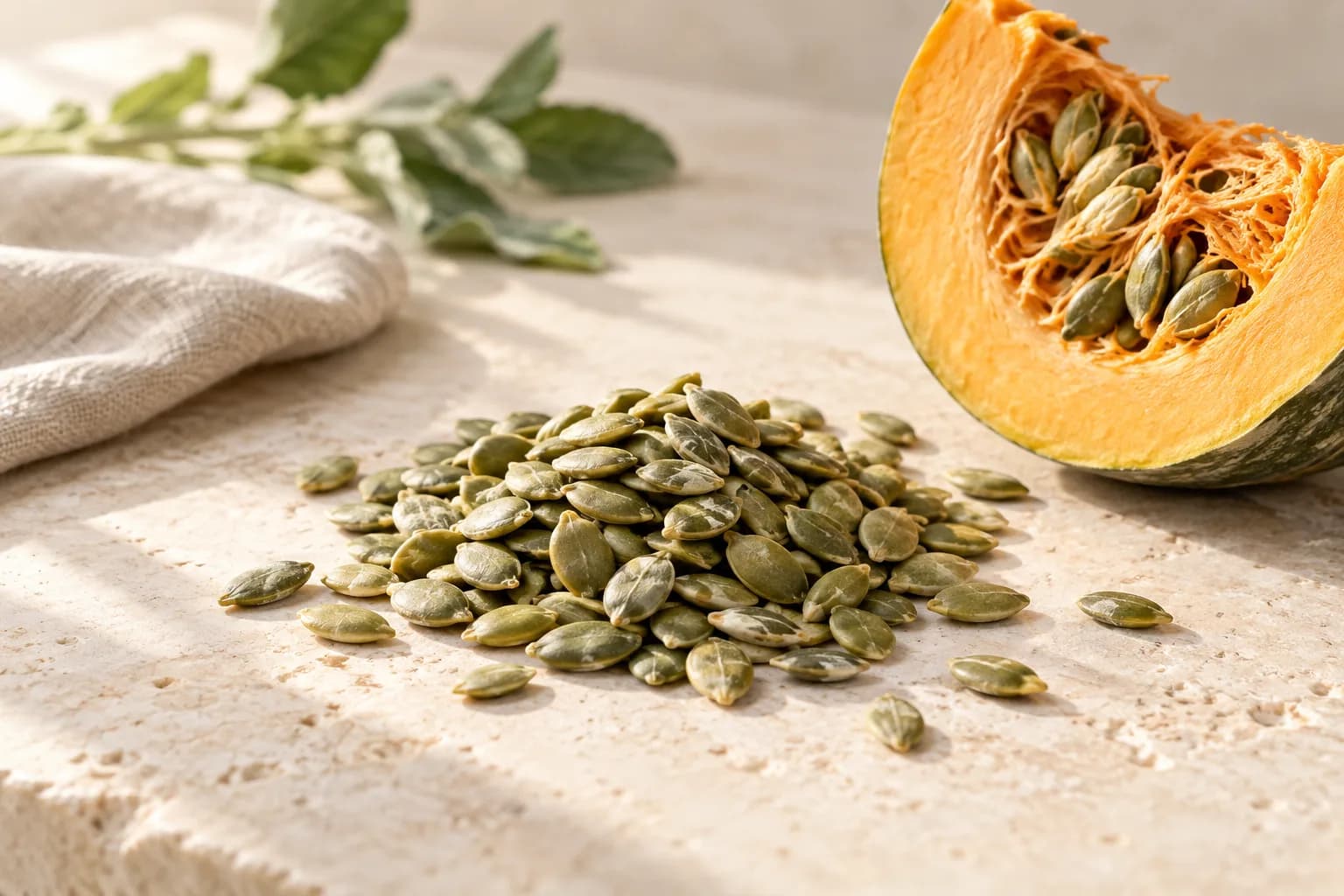
Pumpkin seed
In ROOT35, 500 mg (4:1 extract)
In a 24-week placebo-controlled trial, men taking an oral preparation containing pumpkin seed oil saw a greater increase in hair count than those taking placebo. A separate study of topical pumpkin seed oil in women with female pattern hair loss reported improved hair-growth measurements.
Studies: Cho et al., 2014, Ibrahim et al., 2021
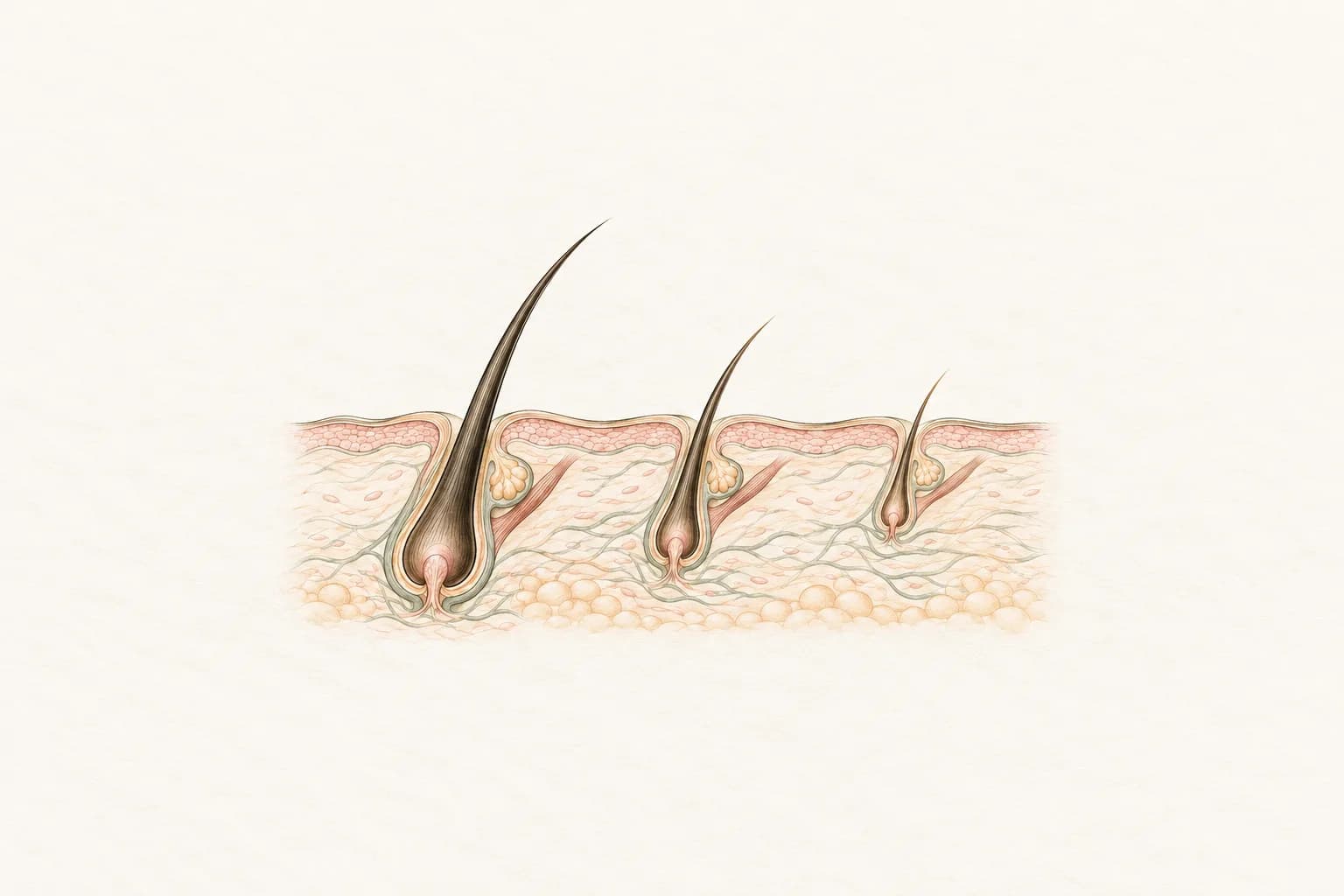
DHT (dihydrotestosterone) is a hormone made from testosterone by an enzyme called 5-alpha-reductase. In people whose hair follicles are genetically sensitive to it, DHT gradually shrinks those follicles, so each new hair grows back finer and shorter. This is the process behind male and female pattern hair loss.
Saw palmetto and pumpkin seed compounds have been investigated for their potential to influence androgen-related pathways. Specific standardised saw palmetto preparations have shown DHT-related findings in human research.
The two are not equally established: the DHT findings come from saw palmetto, and the pumpkin seed research measured hair counts. ROOT35 itself has not been tested for an effect on DHT, and it is not a substitute for medical treatment of pattern hair loss.
Across the range
Other researched ingredients
Rosemary
Human study
In ROOT33 (oil), ROOT34 (extract)
In a six-month study, a leave-on rosemary oil preparation was compared with minoxidil 2%, and both groups saw increased hair counts. ROOT33 is a rinse-off shampoo, so we include rosemary for its scalp-care character rather than claiming the same result.
Studies: Panahi et al., 2015
Iron, zinc, B12, folate and vitamin D
Review of the research
In ROOT35
These nutrients matter most for hair where a deficiency is present. That is why ROOT35 includes them, and why it is worth checking your levels with a doctor if you are shedding.
Studies: Almohanna et al., 2019
N-acetyl cysteine (NAC)
Laboratory research
In ROOT35, 500 mg
NAC helps the body produce glutathione, part of its cellular defence system. Its effects on oxidative stress and inflammatory signalling have been studied mostly in the laboratory.
Studies: Samuni et al., 2013
Peppermint oil
Animal study
In ROOT33
The hair-related research on peppermint oil so far is preclinical, a study in mice. In ROOT33 it is there for the fresh, cooling feel it gives the scalp.
Studies: Oh et al., 2014
Learn more
Study details and references
These studies looked at individual ingredients or preparations, not at ROOT3 products. They explain why we chose each ingredient. They are not clinical trials of ROOT3.
Although formal clinical trials on the complete ROOT3 protocol have not yet been performed, the products have been used routinely in our hair restoration clinic for over one year with consistently positive patient feedback and a high level of patient satisfaction.
The evidence at a glance
Research in peopleLaboratory or animal research
Saw palmetto
ROOT35: ROOT 35 Advanced Hair & Scalp NutritionHuman studies
Reviews of the research
Laboratory and animal research
Pumpkin seed
ROOT35: ROOT 35 Advanced Hair & Scalp NutritionHuman studies
Reviews of the research
Laboratory and animal research
Human studies
Reviews of the research
Laboratory and animal research
Iron, zinc, B12, folate and vitamin D
ROOT35: ROOT 35 Advanced Hair & Scalp NutritionHuman studies
Reviews of the research
Laboratory and animal research
N-acetyl cysteine (NAC)
ROOT35: ROOT 35 Advanced Hair & Scalp NutritionHuman studies
Reviews of the research
Laboratory and animal research
Peppermint oil
ROOT33: ROOT 33 ShampooHuman studies
Reviews of the research
Laboratory and animal research
Human studies
Trials and studies carried out in people.
- ROOT35: ROOT 35 Advanced Hair & Scalp Nutrition
Pumpkin seed oil
Cho et al., 2014
Men taking the pumpkin seed oil preparation showed a greater increase in hair count than those taking placebo.
A 24-week randomised, double-blind, placebo-controlled trial of an oral preparation containing pumpkin seed oil in men with pattern hair loss.
- ROOT35: ROOT 35 Advanced Hair & Scalp Nutrition
Pumpkin seed oil
Ibrahim et al., 2021
Women using pumpkin seed oil showed improvements in hair-growth measurements assessed by trichoscopy.
A comparative study of topical pumpkin seed oil in women with female pattern hair loss.
- ROOT35: ROOT 35 Advanced Hair & Scalp Nutrition
Saw palmetto
Sudeep et al., 2023
The saw palmetto group reported reduced hair fall, improved hair density and lower serum DHT compared with placebo.
A 16-week randomised, placebo-controlled study of a standardised saw palmetto oil, taken orally and applied topically, in adults with pattern hair loss.
- ROOT35: ROOT 35 Advanced Hair & Scalp Nutrition
Saw palmetto
Prager et al., 2002
More men in the botanical group were rated as improved than in the placebo group. The authors called for larger studies.
A small randomised, placebo-controlled pilot study of botanical 5-alpha-reductase inhibitors, including saw palmetto, in men with pattern hair loss.
- ROOT33: ROOT 33 ShampooROOT34: ROOT 34 Conditioner
Rosemary oil
Panahi et al., 2015
Both groups showed increased hair counts at six months. This was a leave-on preparation, so it does not show the same effect for a rinse-off shampoo.
A six-month randomised comparison of a leave-on rosemary oil preparation and minoxidil 2% in men with pattern hair loss.
Reviews of the research
Papers that bring together the findings of many studies.
- ROOT35: ROOT 35 Advanced Hair & Scalp Nutrition
Saw palmetto
Evron et al., 2020
The reviewed studies reported encouraging results, while noting that study sizes and preparations vary.
A systematic review of the published studies of saw palmetto for hair loss.
- ROOT35: ROOT 35 Advanced Hair & Scalp Nutrition
Vitamins and minerals
Almohanna et al., 2019
Iron, zinc, vitamin D and other micronutrients matter most where a deficiency is present, which is why nutritional status is worth checking in people concerned about shedding.
A review of the role of vitamins and minerals in hair loss.
Laboratory and animal research
Early-stage findings that explain how an ingredient may work. They do not show the same effect in people.
- ROOT35: ROOT 35 Advanced Hair & Scalp Nutrition
N-acetyl cysteine (NAC)
Samuni et al., 2013
NAC supports glutathione production and has been studied for its influence on oxidative stress and inflammatory signalling.
A review of the biological activities of NAC, drawn largely from laboratory research.
- ROOT33: ROOT 33 Shampoo
Peppermint oil
Oh et al., 2014
Peppermint oil was associated with hair-growth changes in an animal model. Animal findings do not show the same effect in people.
A preclinical study of topical peppermint oil in mice.
The answers
Frequently asked questions
ROOT33 and ROOT34 change how your scalp and hair feel from the first wash. ROOT35 is a daily routine rather than an instant fix: hair grows slowly, so give it several months of consistent use.
Not as complete products. The studies on this page looked at individual ingredients or preparations. They explain why we chose each ingredient, but they are not trials of ROOT3.
ROOT3 is designed to sit alongside professional hair-loss care, not to replace it. If you take medication or manage a health condition, check with your doctor or pharmacist that a supplement suits you.
We don’t claim that it does. Saw palmetto and pumpkin seed have been investigated for their potential to influence androgen-related pathways, and specific saw palmetto preparations have shown DHT-related findings in human research. ROOT35 itself has not been tested for that effect.
Every ingredient, explained
See what is in ROOT35
Amounts for every ingredient in each daily serving, and why each one belongs in a hair-focused formula.